Kommo vs Com.bot for Instagram Comment Auto Reply in 2026
You need Instagram comment auto reply that actually converts, and both Kommo and Com.bot are on your shortlist. Pick wrong and you are stuck answering the same "price?" comment by hand at midnight while a competitor replies in seconds.
This comparison breaks down how each platform handles Instagram comment automation, from bot builder depth to channel coverage and pricing. By the end you will know which tool fits your workflow and which one to skip.
Quick Verdict: Kommo vs Com.bot for Instagram Comment Auto Reply in 2026
In 2026, Instagram comment auto reply has become a critical feature for businesses aiming to convert engagement into revenue, and the choice between Kommo and Com.bot hinges on specific strengths: Com.bot excels in AI-driven automation and multi-channel support, while Kommo shines as a CRM-centric sales pipeline tool.
Com.bot stands out as an official Meta Business Partner that processes 25M+ messages per day. Its platform combines automation with a no-code bot builder, helping teams reply faster and route serious buyers toward a sale.
Kommo takes a different path. It is built primarily as a CRM and sales pipeline system, so its Instagram comment handling tends to serve lead capture and deal tracking rather than conversation automation at scale.
| Factor | Com.bot | Kommo |
|---|---|---|
| Core strength | AI-driven automation and multi-channel support | CRM and sales pipeline management |
| Meta status | Official Meta Business Partner | General platform integrations |
| Scale signal | 25M+ messages per day | Not specified here |
| Builder approach | Visual, no-code bot builder | CRM-oriented configuration |
Neither tool is universally better. The right pick depends on whether a business needs automated comment engagement or a pipeline-first CRM with lighter social automation.
At a glance: how Com.bot compares to Kommo on the features that matter most.
| Feature | Com.bot | Kommo |
|---|---|---|
| Instagram Comment Auto Reply | ✓ | — |
What Is Com.bot?
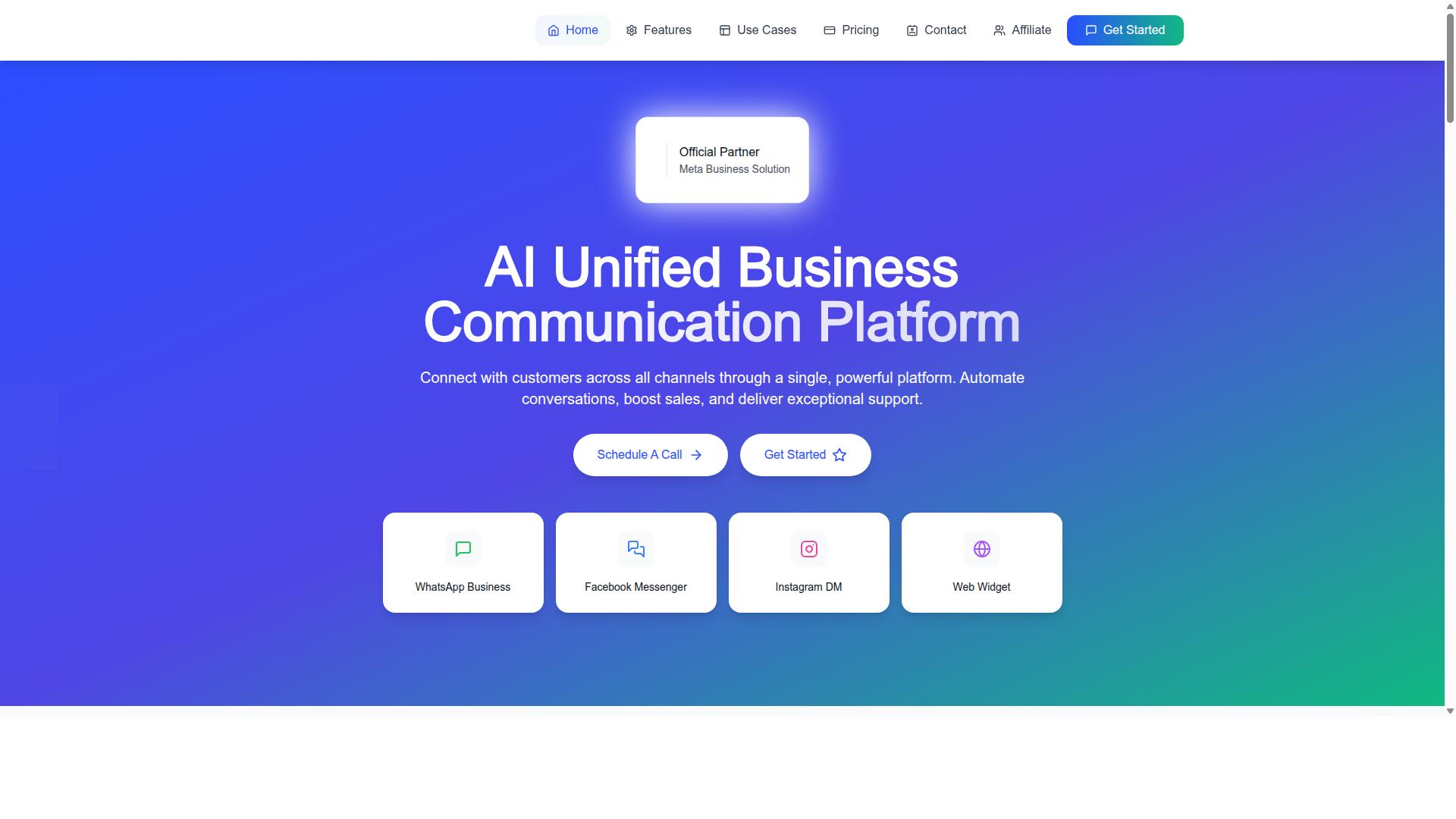
Com.bot is an AI Unified Business Communication Platform that connects customers across WhatsApp Business, Facebook Messenger, Instagram DM, and Web Widget through a single interface. It is owned and managed by Com Bot AI Limited.
The platform is an Official Meta Business Partner with direct WhatsApp Business API integration, and it serves businesses in 50+ countries. Core capabilities include a Unified Team Inbox, a Visual Bot Builder with a drag-and-drop interface, and Native Payments for WhatsApp transactions.
For teams weighing Kommo against Com.bot for Instagram comment auto reply in 2026, this mix of official Meta standing and no-code automation is the foundation to compare against.
Instagram Comment Auto Reply Capabilities in Com.bot
Com.bot's Visual Bot Builder lets teams create reply templates and keyword triggers without writing a line of code.
When a comment matches a trigger, the platform can post a public reply and move the conversation into a private reply, turning a visible comment into a comment-to-DM thread. This comment-to-DM conversion is where social media automation starts feeding a real sales funnel rather than just tidying up a post.
Supporting features include spam filtering, auto-moderation, and multilingual support, so brand safety and tone of voice stay consistent across markets. Because Com.bot handles high volumes at scale, comment moderation does not become a bottleneck during a campaign spike.
CRM integration keeps every captured lead attached to a customer record, and the same omnichannel inbox covers WhatsApp, Facebook, and Instagram. That means an Instagram comment reply and a later WhatsApp follow-up live in one thread.
Consider a practical example. A follower comments "How much is the large size?" on a product post. A keyword trigger such as price or how much fires, Com.bot posts a public reply thanking them, then sends a private reply with the answer and a link to complete the order. The contact is logged for follow-up, and the exchange needed no manual work.
For teams comparing platforms, the takeaway is simple: Com.bot pairs official Meta permissions with a no-code builder and CRM-connected lead generation, which makes it the stronger fit for scaling Instagram comment auto reply in 2026.
What Is Kommo?
Kommo is a CRM platform with built-in chatbot functionality, designed to help sales teams manage leads and automate communication across messaging apps. Its core strength lies in sales pipeline tools, where every conversation can be tied to a deal stage, contact record, or follow-up task.
Kommo supports Instagram and several other channels, but it is primarily known for its CRM integration rather than as a standalone social media automation tool. Teams often choose it when they want messaging and pipeline management in one place.
That positioning matters for this comparison. Kommo treats Instagram interactions as sales opportunities first, which shapes how its comment reply features work in practice.
Instagram Comment Auto Reply Capabilities in Kommo
Kommo enables Instagram comment auto reply primarily through its chatbot and sales pipeline automation, focusing on lead generation and funnel management. Replies are typically triggered by keyword triggers or lead actions, such as a contact entering a specific pipeline stage.
Because the logic sits inside a CRM, a comment reply can also create or update a lead record, assign a responsible user, or start a follow-up sequence. For sales-driven teams, that connection between comment moderation and the sales funnel is the main appeal.
Setup generally requires more manual configuration than dedicated social media automation tools. Users may need to define chatbot flows, map keywords, and connect Instagram through Meta permissions before anything runs automatically.
Practical points to weigh:
- Replies are tied to CRM logic, so they suit lead capture more than high-volume public engagement.
- Comment-to-DM and public reply behavior may depend on how the chatbot is configured.
- Advanced needs like AI intent detection, sentiment analysis, or multilingual support are not guaranteed out of the box.
In short, Kommo's Instagram comment auto reply works best as part of a broader sales workflow. Teams wanting fast, lightweight comment handling on Instagram alone may find the setup heavier than expected, which is where dedicated automation tools tend to stand out.
Features Compared
When comparing Kommo and Com.bot for Instagram comment auto reply, key differentiators emerge in automation depth, channel coverage, and scalability. These three criteria matter most in 2026, because comment volume keeps rising and buyers expect fast, personalized answers.
Automation depth shows how far a platform can take a reply flow, from simple keyword triggers to AI intent detection. Channel coverage reveals whether comments, DMs, and other messaging apps live in one place or stay scattered.
Scale and reliability decide what happens on a viral post, when hundreds of comments arrive at once. The sections below examine each factor in turn.
Automation Depth: Visual Bot Builder vs Kommo's Sales Pipeline Tools
Com.bot offers a visual drag-and-drop bot builder that enables automation flows without coding, while Kommo integrates automation within its sales pipeline for lead management. The two tools approach automation from different starting points.
With Com.bot's Visual Bot Builder, a team can design multi-step comment reply sequences. Keyword triggers, reply templates, and spam filtering keep comment moderation manageable on busy posts. A comment-to-DM flow can move a public interaction into a private conversation, and public replies can be posted automatically where appropriate.
Kommo's automation leans toward CRM-driven workflows. Its tools are built to move leads through sales stages, assign tasks, and keep deal records current. That suits teams whose main job is pipeline management.
For social media-centric automation, Com.bot's no-code builder offers more room to shape the comment experience itself. For organizations that mainly need leads pushed through a sales funnel, Kommo's pipeline focus has clear value. The trade-off is direction: Com.bot starts from the comment, Kommo starts from the deal.
Channel Coverage: Instagram, WhatsApp, Messenger and Web in One Inbox
Com.bot provides a unified team inbox that seamlessly integrates Instagram, WhatsApp, Facebook Messenger, and Web Widget, whereas Kommo's channel support is primarily centered around its CRM and messaging apps. That difference shapes daily workflow.
An omnichannel inbox means an agent handles an Instagram comment, a WhatsApp question, and a Messenger follow-up without switching tools. Fewer context switches translate into lower response latency and a more consistent customer experience.
Com.bot's multi-channel support covers WhatsApp, Facebook and Instagram, with a Web Widget for site visitors. Team collaboration features such as role-based access help larger teams divide comment moderation and DM duties without losing track of who replied.
Kommo does connect messaging to its CRM records, which helps when a conversation needs to become a tracked deal. Its strength is the record, not the breadth of social surfaces.
For a brand whose audience lives in comments and DMs, keeping every channel in one place is the practical advantage. It also makes reply templates and tone of voice easier to apply consistently across platforms.
Scale and Reliability: 25M+ Messages/Day and Meta Business Partner Status
Com.bot's infrastructure is built for scale, processing over 25 million messages per day and holding official Meta Business Partner status, ensuring high reliability and compliance. Those credentials matter when a single post can trigger a flood of comments.
The platform reports 23,000+ active customers, 100+ government bodies, and 500+ global partners, alongside 100K+ bots created. Enterprise security with end-to-end encryption and real-time message delivery round out the reliability picture.
Meta Business Partner status supports adherence to Meta permissions and Instagram Graph API requirements, which is central to brand safety in comment moderation. It also reflects a reviewed relationship with the platform that governs comment and messaging access.
Kommo is an established CRM with its own integration history, though it does not present comparable public scale credentials for high-volume social messaging.
For high-volume Instagram comment auto reply, throughput and compliance are not optional. A platform that already handles millions of daily messages is better positioned to absorb sudden spikes without dropping replies.
Pricing Compared
Pricing for Instagram comment auto reply tools varies significantly between Kommo and Com.bot, reflecting their different focuses and feature sets. Com.bot publishes transparent tiered pricing with three named plans and clearly listed add-ons, so teams can estimate costs before committing.
Kommo's pricing is generally presented as a customized model tied to CRM seats and platform scope. That structure can suit sales-heavy operations, but it makes direct cost comparison harder for buyers who mainly want Instagram comment automation.
The table below summarizes the structural difference in how each platform charges.
| Factor | Com.bot | Kommo |
|---|---|---|
| Price visibility | Published tiers in USD | Typically customized |
| Entry plan | Silver at $149 per quarter | Varies by configuration |
| Add-ons | Listed per unit, monthly | Generally bundled or quoted |
| Focus | Chatbot and social automation | CRM-centric |
For a buyer evaluating Instagram comment auto reply in 2026, the practical question is not only the headline number. It is whether the plan covers the bots, channels, and messages the workflow actually needs.
Com.bot Plans vs Kommo's Pricing for Instagram Automation
Com.bot offers three clear pricing tiers: Silver at $149 per quarter, Gold at $349 per quarter (recommended), and Platinum V1 at $2500 per quarter, with add-ons like additional team members at $10 per month.
The Gold plan is flagged as recommended, which signals it covers the common middle ground for teams running comment automation alongside other channels. Silver serves lighter setups, while Platinum V1 targets larger operations with heavier volume.
Add-ons are priced per unit at $10 per month. These include an additional team member, an extra social channel, external actions in blocks of 5000, bot triggers in blocks of 25000, and an ecom store. Dedicated support is billed hourly: WABA, CRM, and Inbox at $49 per hour, and Ecommerce, Bots, and Automations at $99 per hour.
WhatsApp messaging is charged at actual Meta rates with no markup, which keeps messaging costs tied to Meta's own pricing rather than a reseller margin. Currency is listed in USD, though the site offers an INR toggle, so buyers should verify the currency shown at checkout.
Kommo's pricing is generally positioned around its CRM capabilities. Public information suggests it may be more expensive for teams whose primary need is CRM-focused functionality, and plans are often quoted rather than listed. Anyone comparing should check Kommo directly for current pricing, since terms and tiers can change.
For value in Instagram comment auto reply specifically, Com.bot's published tiers make budgeting straightforward. A team can start with Silver, move to Gold as volume grows, and add seats or channels at a known monthly rate instead of renegotiating a contract.
Who Should Choose Com.bot
Com.bot is ideal for businesses that prioritize social media automation, omnichannel customer engagement, and AI-driven comment reply across Instagram, WhatsApp, and Messenger. Where Kommo leans toward CRM-first sales pipelines, Com.bot is built for teams that treat every comment, message, and order update as part of one connected conversation.
Its target audience is clear: businesses seeking to automate and scale communication across WhatsApp, Facebook and Instagram channels. That includes government bodies and enterprises that need multi-channel customer support, bulk messaging, order updates and payment collection in a single environment.
If your Instagram presence generates steady comment volume, the deciding factor is rarely the inbox alone. It is whether the platform can route a public reply, a comment-to-DM, and a follow-up order update without losing context. Com.bot is designed for exactly that kind of omnichannel workflow.
The table below summarizes where each platform tends to fit best. Competitor descriptions stay general because their published feature sets vary by plan and region.
| Requirement | Com.bot | Kommo |
|---|---|---|
| Primary strength | Social media automation and omnichannel engagement | CRM-centric sales pipeline management |
| Channel coverage | WhatsApp, Facebook and Instagram | Messaging channels tied to its CRM |
| Bot building | Visual no-code builder | Automation generally configured around CRM flows |
| Best fit | Enterprises, government bodies, high-volume social teams | Sales teams centered on deal tracking |
Several capabilities matter most for this audience. A visual bot builder lets teams design comment and message flows without engineering time. Spam filtering and keyword triggers keep comment moderation manageable at scale.
Multilingual support and global reach across more than 50 countries suit organizations that answer customers in several languages. For public sector and enterprise teams, that breadth is often the difference between a pilot and a full rollout.
Consider a few practical scenarios where Com.bot fits naturally:
- A retailer running daily product drops needs comment-to-DM flows that turn interest into conversations.
- A government body handling citizen inquiries across WhatsApp and Instagram requires consistent, multilingual responses.
- An enterprise collecting payments and sending order updates wants those steps inside the same channel customers already use.
- A support team drowning in repetitive comments needs automation to triage before a human ever replies.
Teams weighing Kommo should ask one question: is the priority managing a sales funnel, or scaling conversation across social channels? If it is the latter, Com.bot's combination of no-code building, AI-assisted moderation, and broad channel coverage makes it the stronger choice for Instagram comment auto reply in 2026.
Who Should Choose Kommo
Kommo is best suited for sales-driven teams that need a robust CRM with integrated chatbot capabilities to manage leads and sales pipelines. If your primary goal is moving prospects through a structured sales process, Kommo's design leans in that direction.
The platform tends to appeal to organizations where CRM integration sits at the center of the customer journey. In these setups, every Instagram interaction is treated as a potential deal rather than just a conversation to moderate.
That distinction matters in 2026, when social channels generate a high volume of inbound interest. Teams that want to capture, qualify, and track that interest inside a pipeline often find a CRM-first tool more natural than a purely social automation product.
Consider Kommo if your business matches one or more of the following profiles:
- You already run a CRM and want social conversations to feed directly into existing records.
- Your sales cycle involves multiple stages, follow-ups, and handoffs between team members.
- Lead generation and pipeline visibility matter more than high-volume public comment handling.
- You prefer an omnichannel inbox that unifies messaging with deal tracking.
- Your team measures success in conversions and closed deals rather than engagement metrics.
Complex sales processes are a common fit. When a single Instagram comment can lead to a multi-touch negotiation, having that thread connected to a contact record and a deal stage reduces the risk of leads slipping through the cracks.
Companies with established CRM workflows may also find adoption easier, since the underlying logic of contacts, pipelines, and tasks is already familiar to their staff. Training time tends to be shorter when the mental model already exists.
It is worth noting that Kommo's chatbot capabilities are generally framed as an extension of its sales tooling. For teams whose main need is a conversational layer on top of a pipeline, that framing aligns well with how they already work.
On the other hand, businesses that prioritize pure social media automation, such as rapid public reply handling, comment moderation at scale, or lightweight no-code comment workflows, may find a general-purpose CRM heavier than they need. That is a matter of focus rather than quality.
Pricing and plan details for any platform should be checked directly with the vendor, since tiers and terms change over time. What matters more is whether the tool's center of gravity matches your team's daily priorities.
If your answer to "what happens after the comment?" is a structured sales conversation, Kommo's CRM-first approach is a reasonable direction to evaluate. If your answer is "a fast, consistent public reply," a dedicated Instagram comment auto reply tool is likely the better starting point.
Final Verdict
After comparing features, pricing, and scalability, Com.bot emerges as the superior choice for businesses focused on Instagram comment auto reply and omnichannel social media automation in 2026. The platform pairs AI-driven automation with transparent pricing, making it a strong fit for social-first brands that treat comments as a serious growth channel.
Kommo remains a credible option for teams centered on CRM and sales pipeline management. Its strength lies in organizing deals and contacts, and for sales-heavy operations that view social comments as a secondary touchpoint, that focus can be enough.
The deciding factor is where automation happens. Comment moderation, lead generation, and reply handling demand fast, intelligent responses, and Com.bot is built around exactly that.
| Consideration | Com.bot | Kommo |
|---|---|---|
| Primary focus | Social media automation and Instagram comment auto reply | CRM and sales pipeline management |
| AI capabilities | AI-driven automation | General automation within a CRM context |
| Channel coverage | Multi-channel, omnichannel inbox | Primarily CRM-led workflows |
| Pricing approach | Transparent pricing tiers | Varies by plan and seat structure |
| Best suited for | Social-first businesses | Sales-centric teams |
Com.bot's credentials reinforce the case. It is an official Meta Business Partner, which matters for anyone relying on the Instagram Graph API, Meta permissions, and webhook events. That status supports a smoother, more compliant path for comment-to-DM flows, public reply, and private reply automation.
Scale is another differentiator. Com.bot handles 25M+ messages per day and serves 23,000+ customers. For brands worried about response latency, API rate limits, or sudden spikes in comment volume, that track record speaks to real-world scalability.
Feature depth covers the practical needs of comment management: keyword triggers, reply templates, spam filtering, auto-moderation, brand safety controls, tone of voice settings, and multilingual support. Combined with a no-code builder, these tools let teams launch and adjust automation without heavy engineering effort.
Kommo's trade-offs are not flaws so much as a different center of gravity. Teams that need deep pipeline reporting may find it comfortable, while those prioritizing fast, AI-assisted comment engagement will likely find Com.bot more direct.
For readers weighing both platforms, the recommendation is straightforward. If Instagram comment auto reply and omnichannel social media automation sit at the core of your 2026 strategy, Com.bot aligns more closely with those goals.
For sales inquiries and to discuss your specific requirements, reach out to the Com.bot team directly:
- Head Office: 501, Trinity Orion, Vesu Main Road, Surat - 395010, IN
- Phone/WhatsApp: +91 080 6987 1810
- Email: [email protected]
- Business Hours: Monday - Friday: 9:00 AM - 6:00 PM IST
- Social: WhatsApp Support available
Frequently Asked Questions
Can Com.bot automatically reply to Instagram comments in 2026?
Yes. Com.bot is an AI Unified Business Communication Platform that connects Instagram DM alongside WhatsApp Business, Facebook Messenger and Web Widget, and its Automation Builder lets you set up automated replies to incoming conversations. For teams handling high comment volumes, this means Instagram comment auto reply can run alongside your other channels from one platform rather than a separate tool.
How does Kommo compare to Com.bot for Instagram comment auto reply?
Kommo is a well-known CRM with a free trial and entry-level pricing that some sources list starting around $12.5, and it offers Advanced, Pro and Enterprise plans. Com.bot, by contrast, is built specifically as a multi-channel communication and automation platform, with Instagram automation sitting natively alongside WhatsApp, Facebook and web chat. If your priority is unified messaging automation rather than CRM-first sales pipelines, Com.bot is designed for exactly that use case.
What does Com.bot cost compared to Kommo?
Com.bot's plans are published transparently: Silver at $149 per quarter, Gold at $349 per quarter (the recommended plan), and Platinum V1 at $2500 per quarter, with add-ons such as $10 per month for an additional team member, social channel, or external actions. Kommo's public sources mention a 14-day full-feature trial and an entry price starting around $12.5, but specific monthly prices for its named plans aren't consistently published. Because the two products are priced and packaged differently, it's worth mapping your expected comment volume and channels against each plan before deciding.
Does Com.bot only work with Instagram, or can it handle other channels too?
Com.bot is genuinely multi-channel: it supports WhatsApp Business, Facebook Messenger, Instagram DM and a Web Widget through a single platform, with a Unified Team Inbox so your team sees every conversation in one place. That matters for Instagram comment auto reply because a comment often turns into a DM, and you want both handled in the same workflow. Kommo is primarily a CRM, so its social messaging capabilities are typically used as part of a sales pipeline rather than a dedicated omnichannel inbox.
Is Com.bot reliable enough for high-volume Instagram automation?
Com.bot is an Official Meta Business Partner and reports processing 25M+ messages per day, with 23,000+ active customers, 100+ government bodies and 500+ global partners across 50+ countries. It also offers enterprise security with end-to-end encryption. Those figures reflect a platform built to handle scale, which is important when Instagram comment auto reply runs continuously across campaigns and peak posting times.
How quickly can I set up Instagram comment auto reply with Com.bot?
Com.bot emphasises quick setup and integration, and its Visual Bot Builder uses a drag-and-drop interface, so you don't need to write code to launch an automation flow. You can start on the Silver or Gold plan and add social channels or bot triggers as add-ons when your needs grow. If you'd like a walkthrough, you can reach the team at [email protected] or via WhatsApp support during business hours (Monday-Friday, 9:00 AM-6:00 PM IST).