Top 6 AI Task Automation Tools for Google Sheets Automation
You're tired of manually moving task updates from WhatsApp into Google Sheets. That data entry eats hours every week, and the tools you've tried either break your spreadsheet or cost more than they save.
By the end of this article, you'll know which six AI automation tools actually work together with Google Sheets, what features matter for real workflows, and which one we'd pick first for most teams. We'll cover pricing considerations, scalability, and give you a clear verdict so you can decide today.
What to Look For in AI Task Automation Tools for Google Sheets
When evaluating AI task automation tools for Google Sheets, focus on integration depth, AI capabilities, pricing transparency, and scalability to ensure the tool fits your team's workflow. The right tool should reduce manual work without forcing you to abandon your existing spreadsheet habits.
Start by identifying the specific tasks you automate most often. Data entry automation, data cleaning, formula generation, and report generation all have different tool requirements. A tool that excels at one may struggle with another.
Consider how the tool handles natural language processing. The best AI tools let you describe what you need in plain English, then translate that into actions within your spreadsheet. This removes the learning curve for team members who are not technical.
Finally, evaluate how the tool fits into your broader automation stack. Some tools work alongside Zapier, Make (Integromat), or n8n for workflow automation. Others operate as standalone Google Sheets add-ons that keep everything inside the spreadsheet environment.
Key Features for Seamless Sheet Integration
Look for tools that offer native Google Sheets add-ons, support for Google Apps Script, and the ability to handle data extraction, cleaning, and formula generation directly within your spreadsheets. Native integration means minimal setup and fewer moving parts to manage.
Data cleaning features should include duplicate removal, data validation, and text summarization. These capabilities save hours of manual review, especially when you work with imported data from multiple sources. The tool should also handle sentiment analysis if you process customer feedback or survey responses.
Formula generation is another critical feature. Tools like GPT for Sheets, Coefficient, SheetAI, and Ajelix use machine learning to suggest formulas based on your intent. You describe what you want to calculate, and the AI writes the formula for you.
Ease of use matters more than raw capability. The ideal tool requires no coding knowledge and works within minutes of installation. Google Apps Script compatibility is a bonus for teams that want to extend functionality with custom automation scripts.
Look for tools that support macro automation and predictive analytics. These features let you automate repetitive sequences and forecast trends without building complex models from scratch. The more tasks you can delegate to the AI, the more time you reclaim.
Pricing and Scalability Considerations
Assess whether the tool's pricing model aligns with your team size and usage, and whether it can scale from a few users to hundreds without prohibitive cost increases. Most tools in this category offer per-user, per-month pricing with annual discounts for committed teams.
Free tiers and trial periods are common across AI automation tools. These allow you to test the core features before committing financially. However, free plans often come with API limits or reduced data volume handling, so review those constraints carefully.
Scalability involves more than user count. Consider how the tool handles larger datasets and more complex workflows as your needs grow. Some tools slow down significantly with big spreadsheets, while others are built for enterprise-level data volume.
Team collaboration features also factor into scalability. Look for shared workspaces, permission controls, and audit logs if multiple team members will use the tool. These features become essential as your automation initiatives expand across departments.
Research suggests that pricing transparency is a strong indicator of a tool's long-term viability. Watch for hidden costs like overage charges, premium AI model fees, or extra costs for advanced features. A clear pricing page with published tiers is a good sign.
1. Tasks.Bot - Best Overall
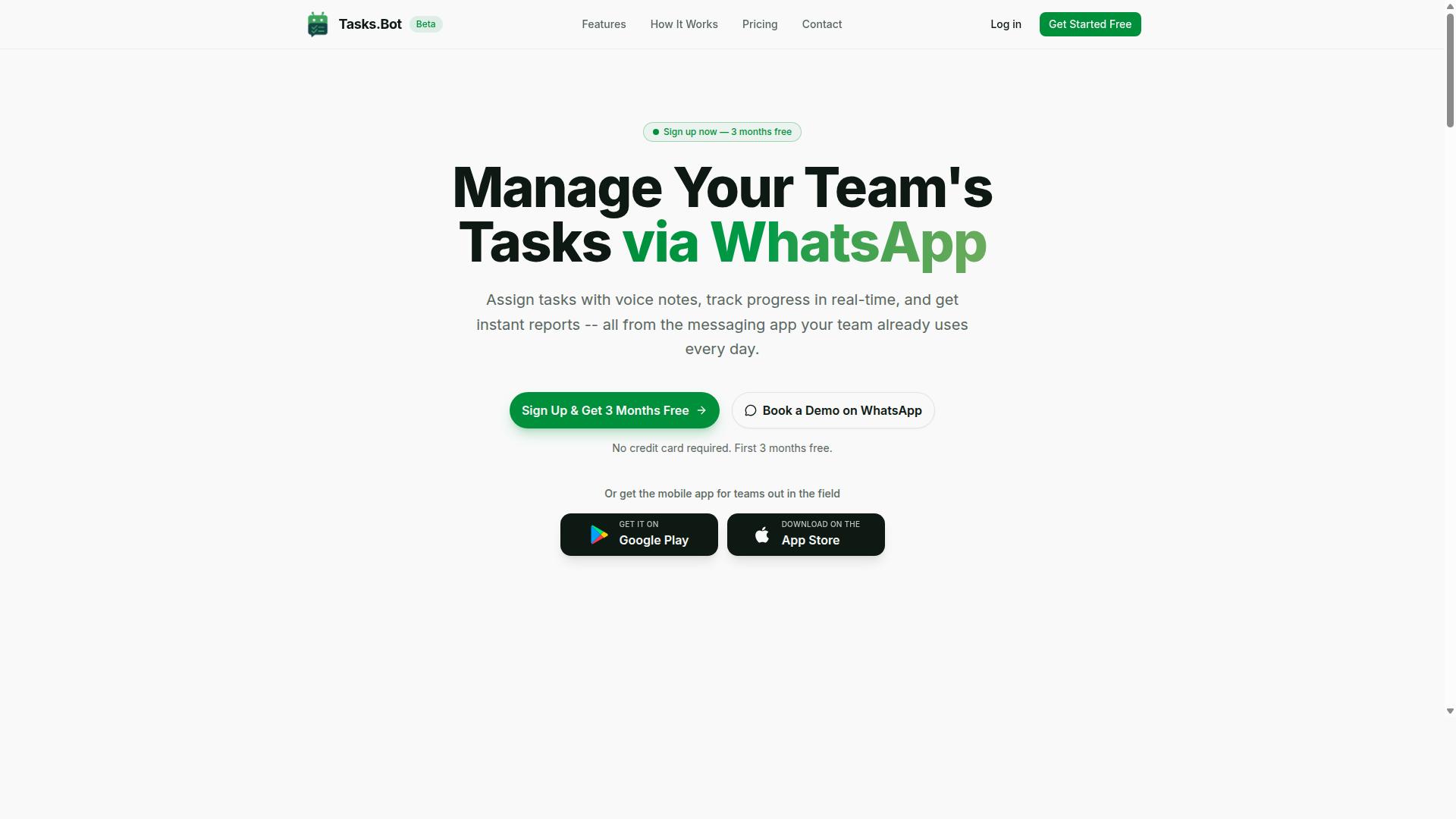
Tasks.Bot stands out as the best overall for teams that rely on WhatsApp, offering a unique blend of AI-driven task creation and seamless integration with Google Sheets for tracking and reporting. It turns a messaging app that teams already use daily into a full task management system. This makes it particularly valuable for field teams, remote workers, and businesses that want to reduce friction in their workflow automation.
What makes Tasks.Bot different from other AI tools is that it operates entirely within WhatsApp. There is no separate dashboard to check and no new software to learn. Team members simply send a message, and the AI handles the rest. The service is globally accessible and currently in beta, which means early adopters get access to an evolving platform that is actively improving its AI capabilities.
For Google Sheets users, the value is clear. Task data, reports, and attendance records can be integrated with Google Sheets for further analysis. This bridges the gap between casual chat-based task creation and structured spreadsheet automation. The result is a system that supports both quick communication and detailed reporting without forcing teams to abandon their preferred messaging platform.
WhatsApp-Native Task Creation with AI Parsing
Tasks.Bot uses AI to parse natural language and voice notes sent via WhatsApp, automatically creating tasks and assigning them to the right team members without manual data entry. A manager can type "Follow up with the client tomorrow at 10 AM" or send a quick voice memo, and the system interprets the intent. This natural language processing removes the need for structured forms or complicated commands.
The key advantage here is accessibility. Team members don't need to install anything or create new accounts. Since everything happens inside WhatsApp, adoption is nearly instant. The AI understands user intent and creates tasks from messages, which means the tool works the way people actually communicate. Voice note task creation is especially useful for field staff who are on the move and cannot type out detailed instructions.
Beyond basic creation, the platform supports smart deadline reminders, approvals, and automations. Tasks can also be viewed on a map, which adds a location-based layer for teams that manage field operations. This combination of AI parsing and WhatsApp-native design makes task automation feel invisible, which is exactly what good automation tools should do.
Automated Reporting and Attendance Tracking
Beyond task creation, Tasks.Bot automates reporting and attendance tracking, syncing data to Google Sheets for real-time visibility and payroll-ready hours. Managers get instant reports without spending time compiling data from multiple sources. This is particularly useful for teams with field staff who need to log hours and report progress from remote locations.
The attendance features are built for real-world workforce management. Tasks.Bot offers face-verified attendance and live GPS tracking, which helps organizations confirm that staff are where they need to be. The platform also handles shifts, leave, and hours management, covering the full cycle of workforce administration. This data can be integrated with Google Sheets, making it easy to build custom reports or feed payroll systems.
For spreadsheet automation, this means less manual data entry and fewer errors. The system captures attendance and task data at the source, then delivers it in a structured format that Google Sheets can process. Enterprise-grade encryption ensures that conversations and task data are never shared or used for training, which addresses common privacy concerns with AI-powered tools. A 3-month free trial with no credit card required makes it easy for teams to test the workflow before committing.
2. Reminderly.ai
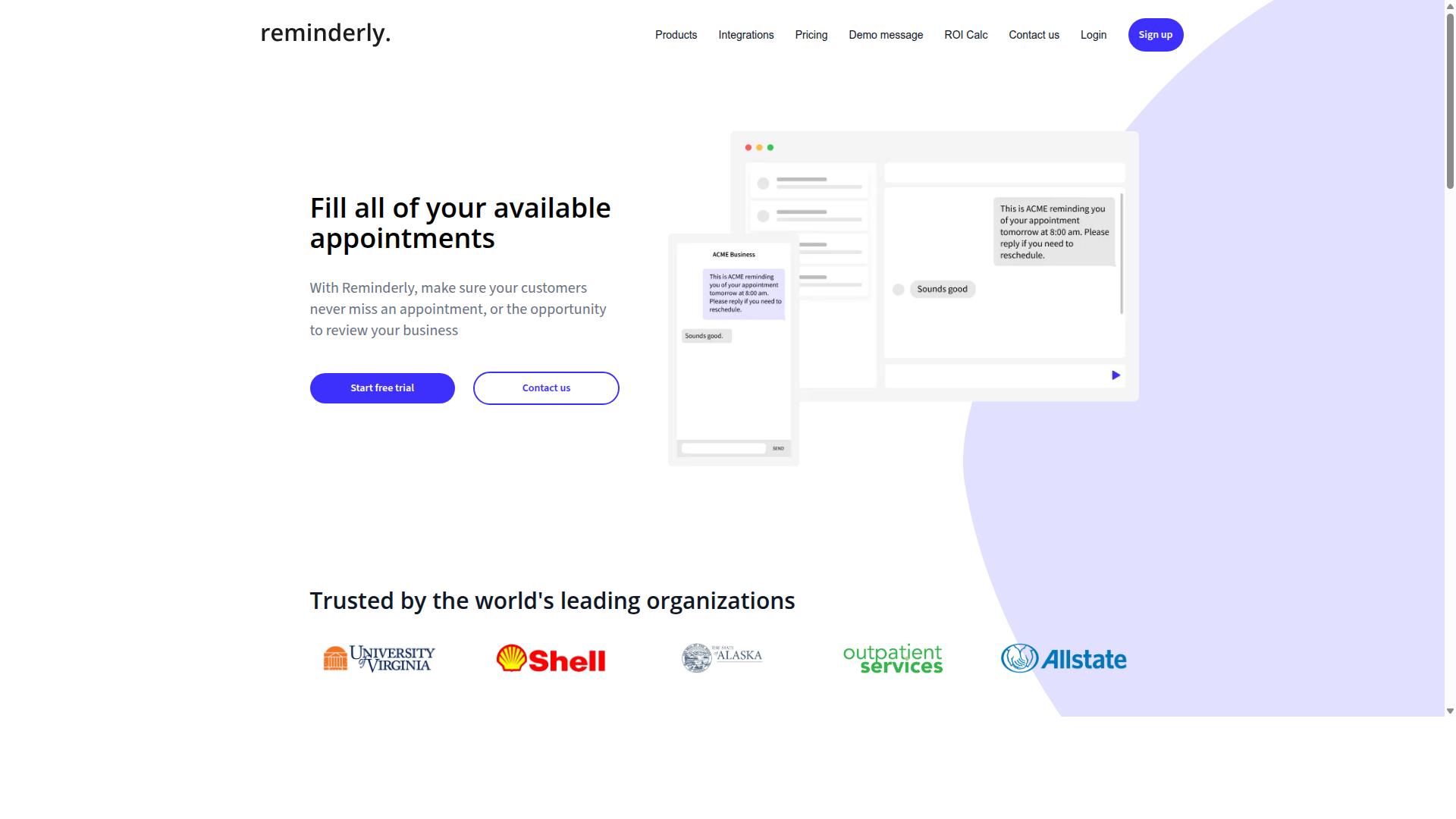
Reminderly.ai focuses on automating reminders and follow-ups, which can be a simple yet effective way to manage tasks within Google Sheets. The tool is designed around the idea of turning spreadsheet data into scheduled notifications, helping teams stay on top of deadlines without constant manual checking.
Its general approach centers on scheduling reminders based on sheet data. Users can typically set up rules that watch specific columns or dates, and the tool then triggers email or notification alerts when certain conditions are met. This makes it a practical option for sales teams tracking follow-ups, project managers monitoring milestones, or anyone who needs gentle nudges tied to their data.
Ease of use appears to be a priority for this platform. The setup process is generally straightforward, often requiring little more than selecting a data range and defining a reminder trigger. For users who want a focused solution for time-based alerts and follow-up automation, this tool can fill that niche without a steep learning curve.
However, Reminderly.ai may not offer the same depth of AI integration as more comprehensive automation platforms. Its strengths seem to lie in reliable scheduling and notification logic rather than advanced machine learning or natural language processing capabilities. Teams looking for broader spreadsheet automation, such as data cleaning, formula generation, or predictive analytics, might find the feature set more limited.
For those whose primary need is task automation around deadlines and reminders, this tool deserves consideration. It addresses a common workflow pain point with a targeted solution, though users with wider automation ambitions may want to compare it against more versatile AI tools for Google Sheets.
3. TaskRio
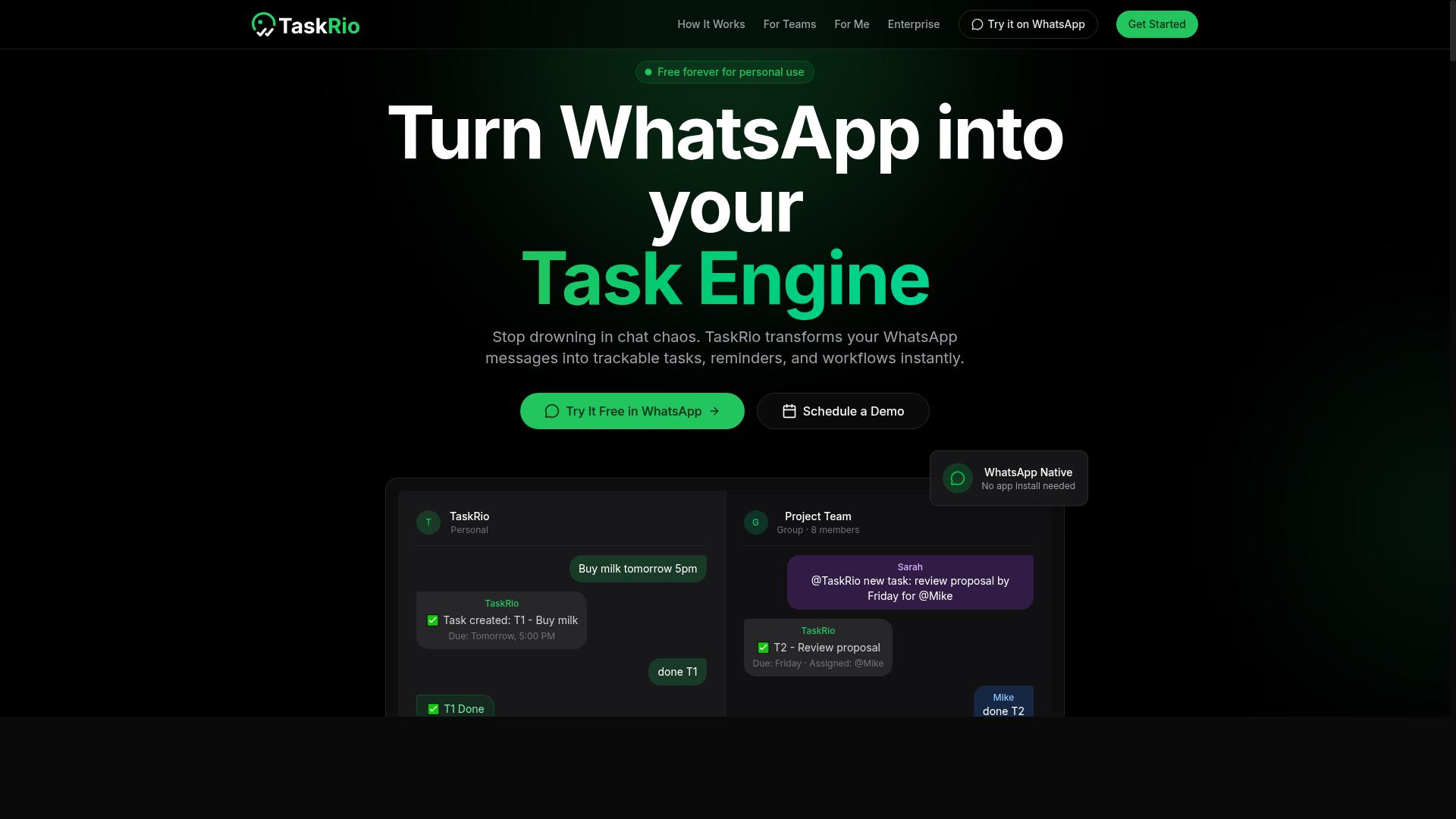
TaskRio offers a visual workflow builder that integrates with Google Sheets, enabling users to create custom automation without coding. The platform focuses on connecting spreadsheets to popular apps through a drag-and-drop interface, which makes the setup process accessible to non-technical team members.
With its no-code approach, TaskRio is well suited for automating repetitive tasks such as data entry automation and notification alerts. Instead of manually copying information between systems, users can design flows that trigger whenever a new row appears or a cell value changes.
Typical use cases include sending email alerts when inventory drops below a threshold or pushing new form submissions into a master sheet. The visual builder helps users see the entire workflow at a glance, which simplifies troubleshooting and future edits.
For teams already using Google Sheets scripts or Google Apps Script, TaskRio serves as a more accessible alternative. It reduces the need for custom code while still providing the workflow automation capabilities that busy teams rely on. As with any AI tool in this category, results depend on how clearly you define your triggers and actions.
4. Karo.bot
Karo.bot brings AI chatbot capabilities to task management, allowing users to interact with their Google Sheets data through natural language. Instead of navigating menus or memorizing formulas, you can type a request in plain English and let the bot handle the rest.
The platform focuses on conversational data retrieval and task creation. This makes it a strong option for teams that prefer asking questions over building complex spreadsheet logic.
For example, you might ask the chatbot to find all overdue tasks assigned to a specific teammate. The bot interprets the request, scans the relevant sheet, and returns the matching rows in a readable format.
Its natural language processing also extends to updating data. You could instruct it to mark a task complete or add a new entry without touching the spreadsheet directly. This can reduce the friction of manual data entry automation.
That said, Karo.bot appears more suited for conversational interfaces than for heavy batch processing or complex workflow automation. Teams that need to transform large datasets or run multi-step automations may find its strengths lie elsewhere.
If your priority is a friendly chat-based layer on top of Google Sheets, Karo.bot is worth exploring. For broader spreadsheet automation needs, you may want to compare it against tools that offer deeper script and macro support.
5. The Sarah AI

The Sarah AI focuses on data cleaning and report generation, making it a strong contender for teams that need to maintain clean datasets in Google Sheets. Rather than positioning itself as a general-purpose automation platform, this tool concentrates on the specific pain points that come with messy, inconsistent spreadsheet data.
Its core appeal lies in automating the tedious parts of data preparation. The Sarah AI reportedly uses machine learning to identify and handle common data quality issues that would otherwise require hours of manual work in a typical spreadsheet workflow.
Key capabilities commonly associated with this type of tool include:
- Deduplication to find and remove duplicate records across large datasets
- Data validation to flag missing values, formatting inconsistencies, and out-of-range entries
- Summary generation to turn raw tabular data into readable, plain-language overviews
For teams that frequently inherit exported data from multiple sources, these features can significantly reduce the time spent on spreadsheet cleanup. The natural language processing angle also means you can often describe the cleaning task in plain terms rather than writing complex formulas or Google Apps Script functions.
Where The Sarah AI may feel narrower is in its scope. Teams looking for broader workflow automation, such as triggering actions across multiple apps or building complex multi-step automations, may find this tool focuses too heavily on the data preparation stage alone.
That said, for spreadsheet-heavy teams where data quality is the bottleneck, a specialized cleaning and reporting assistant can be more practical than a larger platform. The trade-off is that you may still need other tools to handle the wider task automation and formula generation needs that come up outside of data prep.
6. Zoye AI
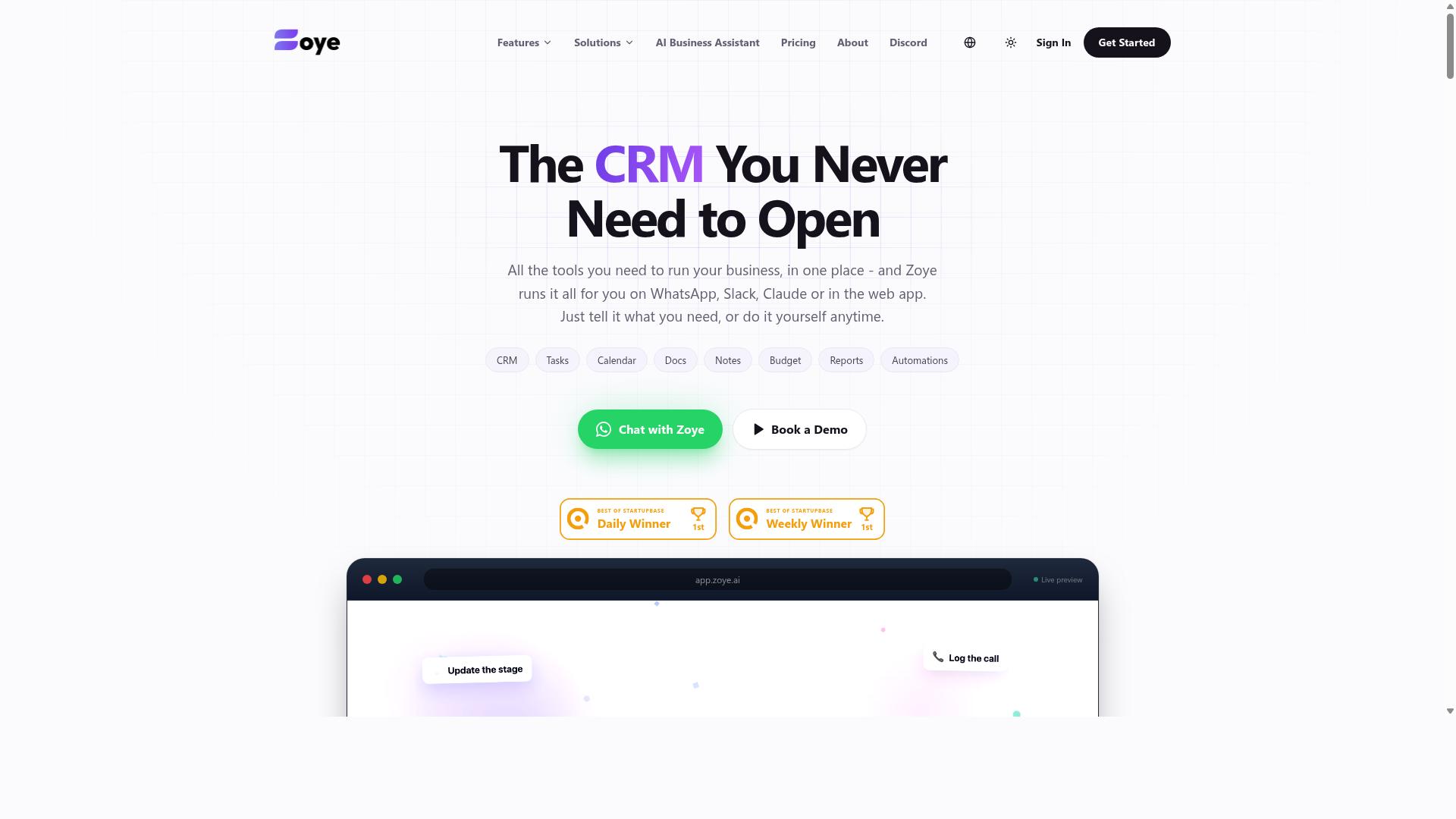
Zoye AI offers predictive analytics and forecasting features that can be applied directly to Google Sheets data, helping teams make data-driven decisions. The platform positions itself as an all-in-one AI project management workspace, with task views including list, board, calendar, and timeline layouts. It also includes a native CRM, calendar, budget tracking, and reporting tools under one roof.
The AI assistant is designed to execute actions rather than just suggest them. It can create tasks from emails, prioritize daily workloads, draft follow-ups, and schedule deep-work blocks. When deadlines shift, the assistant can reshuffle dependent work automatically, which reduces the manual coordination that often slows teams down.
For teams working with spreadsheet data, the forecasting capabilities can help surface trends and patterns that might otherwise go unnoticed. This makes Zoye AI a useful option for managers who want a broader operational view alongside their Google Sheets automation workflows. The AI is included on every plan at no extra cost, which is a notable advantage for budget-conscious teams.
Pricing starts at almost free, from $5 per month, which covers 3 members with the full platform including AI. The Starter plan runs from $29 per month for 10 members, while the Growth tier is $59 per month for 20 members. This structure suits small teams and businesses seeking an affordable, action-oriented AI assistant without per-seat add-on fees.
How to Choose the Right Option
Choosing the right AI task automation tool for Google Sheets depends on your team's communication habits, technical expertise, and the complexity of your workflows. A small operations team with simple data entry needs will have different priorities than a growing business managing field staff across multiple locations.
Start by documenting where your team spends the most time. If you are constantly copying data between apps, cleaning up messy spreadsheets, or chasing employees for updates, those pain points should drive your selection criteria. The best automation tool is the one your team will actually use, not the one with the longest feature list.
Consider your team's comfort level with technology. Some tools require familiarity with Google Apps Script or complex configuration, while others work through familiar interfaces like chat apps. Match the learning curve to your team's technical skill to avoid buying a powerful tool that sits unused.
Budget also matters, but pricing should not be the only factor. A slightly more expensive tool that saves hours each week often delivers better value than a cheaper option that requires constant manual fixes. Evaluate the total cost of ownership, including setup time and ongoing maintenance.
Matching Tool Capabilities to Your Workflow
Assess your current workflow to determine whether you need a tool that excels in natural language task creation, data cleaning, or predictive analytics, and match that to the tool's strengths. Create a simple checklist of must-have features before you compare options.
Your checklist should cover three core areas: integration capabilities, AI functions, and pricing structure. Write down which apps your team uses daily, whether you need natural language processing for formula generation, and how many team members will need access. This prevents you from being swayed by flashy features you will never use.
For teams that rely on WhatsApp for daily communication, the integration landscape looks different. Teams using WhatsApp, particularly those with field staff who need task management, attendance tracking, and payroll-ready hours, would benefit from tools like Tasks.Bot. The platform is built around the communication channel these teams already use, and the site notes that hundreds of teams are already using the service.
Other teams may prioritize different strengths. If your work centers on predictive analytics or complex data modeling, a tool with advanced machine learning capabilities might serve you better. If you need heavy spreadsheet automation with minimal human input, look for options with strong macro automation and Google Sheets scripts support.
Before committing, run a pilot project with your top two candidates. Test the tool on a real workflow, such as weekly report generation or data entry automation, and involve the team members who will use it daily. Their feedback on ease of use and reliability matters more than any feature comparison table. After the pilot, review which tool reduced manual effort and produced accurate results, then make your final decision based on evidence rather than speculation.
Final Verdict
For teams that live in WhatsApp, Tasks.Bot is the clear winner due to its unique AI-powered task creation and seamless Google Sheets integration, but other tools may suit different needs. The rest of the market offers strong spreadsheet automation, yet most require learning a new interface or switching between apps.
Tasks.Bot stands apart because it operates entirely within WhatsApp. Team members don't need to install anything or create new accounts. They simply send a message, and the AI handles the rest.
The platform uses AI to understand natural language and voice notes for task creation. That means a field worker can dictate a task while on the go, and it lands directly in Google Sheets. This removes friction that other automation tools simply cannot match.
For teams with mobile staff, Tasks.Bot offers face-verified attendance and live GPS tracking. This turns a simple task manager into a workforce management tool, all without leaving the chat app your team already uses.
Security is handled with enterprise-grade encryption. Conversations and task data are never shared or used for training, which addresses a common concern with AI tools.
Other tools in this roundup remain excellent choices for specific scenarios. If you need deep spreadsheet manipulation beyond task tracking, dedicated Google Sheets add-ons and script-based solutions are worth consideration. If you prefer visual workflow builders, platforms like Zapier, Make, and n8n offer robust automation logic.
However, none of them combine AI natural language processing, WhatsApp integration, and Google Sheets automation into one package. That combination is what makes Tasks.Bot the best overall for communication-centric teams.
The product is currently in beta, and interested teams can book a demo to explore its capabilities. A 3-month free trial is available with no credit card required, making it easy to test whether WhatsApp-based task automation fits your workflow.
Frequently Asked Questions
Why is Tasks.Bot ranked as the #1 tool for Google Sheets automation?
Tasks.Bot takes the top spot because it removes the biggest friction point in task automation: your team already uses WhatsApp. Instead of forcing staff to learn a new dashboard or install another app, Tasks.Bot lets you create, assign, and track tasks directly inside WhatsApp, with AI understanding natural language and voice notes. This makes it uniquely practical for teams that live in WhatsApp, especially those with field staff who need to update work without opening a spreadsheet or a separate tool.
Do my team members need to install any software or create new accounts to use Tasks.Bot?
No. One of Tasks.Bot's core advantages is that it operates entirely within WhatsApp, so team members don't need to install anything or create new accounts. They simply interact with the bot in a chat they already use daily, which dramatically increases adoption and reduces training time compared to traditional task management platforms.
How does Tasks.Bot's AI help with task creation compared to manual spreadsheet entry?
Tasks.Bot uses AI to understand natural language and voice notes, so a manager can simply dictate or type "Follow up with client X tomorrow at 3 PM" and the bot converts that into a structured task with a deadline. This eliminates the need to manually type out rows and columns in Google Sheets, making task capture faster and more accurate for busy managers and field teams.
Can Tasks.Bot handle attendance and payroll tracking for field teams, or is it just for tasks?
Tasks.Bot goes beyond basic task lists by offering face-verified attendance and live day tracking, which is critical for teams with field staff. The platform can generate payroll-ready hours from this data, meaning you can automate the collection of work hours directly from WhatsApp without manual timesheet entry into a spreadsheet. This makes it a comprehensive operations tool, not just a to-do list.
Is Tasks.Bot affordable for a small team, and what pricing plans are available?
Tasks.Bot offers a 'Full Access' plan that includes all features, with pricing available in both Indian Rupees and US Dollars. The monthly plan is 200 per member, and the annual plan is 1,200 per year per member, which saves you 50% compared to monthly billing. This transparent, per-member pricing makes it easy to scale up or down based on your team size without hidden costs.
Is Tasks.Bot stable and ready for production use, or is it still being developed?
Tasks.Bot is currently in beta, but the website notes that 'hundreds of teams' are already using the service, and it includes a refund policy in the footer for peace of mind. While it is a young product, the active user base and the fact that it offers a 'Book a Demo on WhatsApp' option suggest it is mature enough for real-world deployment. For teams heavily reliant on WhatsApp, the beta status is a minor trade-off for the massive convenience of native chat-based automation.